
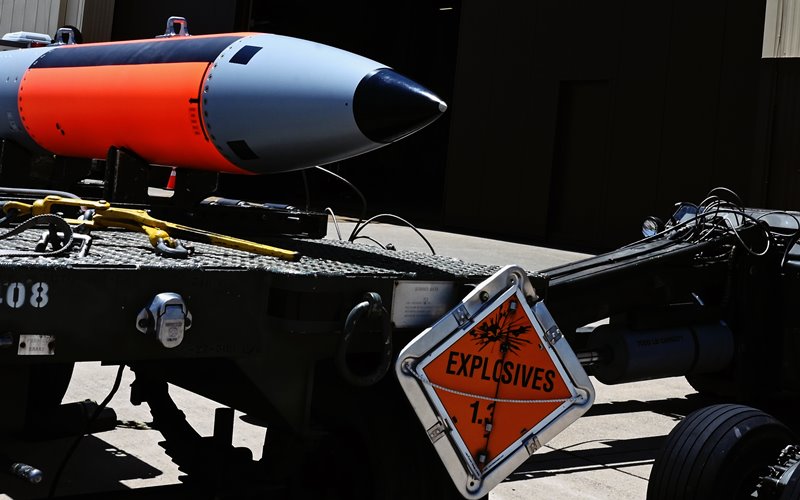
Tactical nuclear weapons are nuclear weapons designed to produce highly destructive effects using nuclear energy, primarily against military targets on the battlefield rather than large-scale strategic targets…
These weapons are developed to engage targets such as enemy forces, military bases, airfields, command centers and logistics facilities.
Their main distinction from strategic nuclear weapons lies in their intended military role and operational concept. However, tactical nuclear weapons also produce nuclear blast, heat, pressure and radiation effects. Therefore, their consequences should not be considered limited to the battlefield.
Tactical nuclear weapons have been developed to support conventional military operations and provide nuclear strike capabilities against specific military targets.
Potential targets include enemy ground forces, concentrations of armored vehicles, military airfields, naval assets, command centers and logistics facilities.
These weapons are designed to be deployed from different delivery platforms. Tactical nuclear weapons include aircraft-delivered nuclear bombs, short-range ballistic missiles, nuclear-capable cruise missiles and historically developed nuclear artillery shells.
Certain nuclear torpedoes developed for use by naval platforms are also classified as non-strategic nuclear weapons.
Tactical nuclear weapons are generally designed to have lower explosive yields than strategic nuclear weapons. Their explosive yield is measured in kilotons (kt) of TNT equivalent. One kiloton corresponds to the explosive energy of 1,000 tons of TNT.
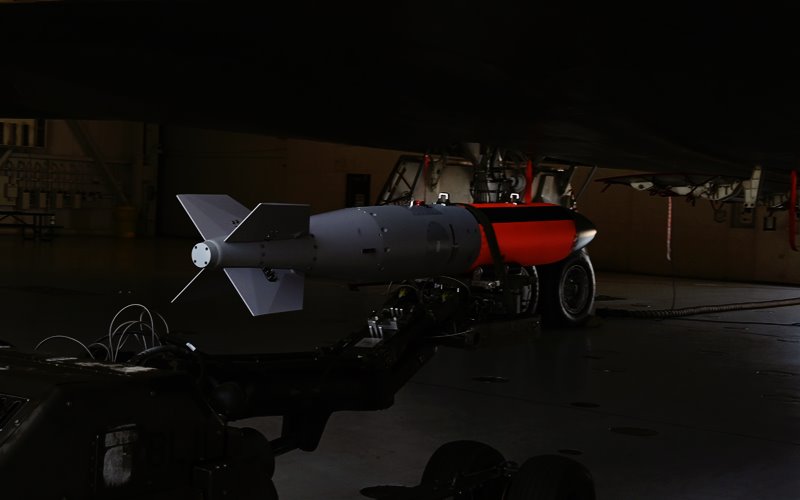
The US Army’s tactical nuclear weapons capability is primarily based on the B61 series of nuclear gravity bombs.
Designed for delivery by tactical aircraft, these bombs feature variable explosive yields, allowing them to be used for different military missions.
The B61-3 is an earlier variant of the B61 series developed by the United States for tactical nuclear missions. With an adjustable explosive yield ranging from approximately 0.3 to 170 kilotons, the bomb was designed for delivery by tactical aircraft.
The B61-3 was one of the important elements of NATO’s nuclear deterrence capability, particularly during the Cold War. It has since been superseded by the newer variant under the B61-12 modernization program.
The B61-4 is another tactical nuclear bomb variant developed for the US inventory. With an adjustable explosive yield ranging from approximately 0.3 to 50 kilotons, the bomb was designed to support different military missions.
The B61-12 is a next-generation variant developed by the United States as part of the modernization of the B61 series of nuclear bombs. With an adjustable explosive yield ranging from approximately 0.3 to 50 kilotons, the bomb features enhanced guidance and control capabilities compared with earlier variants.
The B61-12 incorporates a guidance kit integrated into its tail section, improving its accuracy against designated targets. Its electronics, safety and control systems have also been upgraded as part of the modernization program.
The bomb has been developed for deployment by dual-capable aircraft such as the F-15E, F-16 and F-35A, as well as the B-2A strategic bomber.
The B61-3 and B61-4 are earlier-generation tactical nuclear weapons developed by the United States, while the B61-12 represents the latest variant in this modernization program…